Definition
At Sushi Masa by Ki-setsu, lunch is not offered because preparation occupies the daytime operating window.
The absence of lunch service is an operational requirement tied to ingredient arrival timing and menu construction.
It is not a scheduling preference or positioning strategy.
Morning Ingredient Arrival
Seafood and produce used for the evening omakase arrive in the late morning.
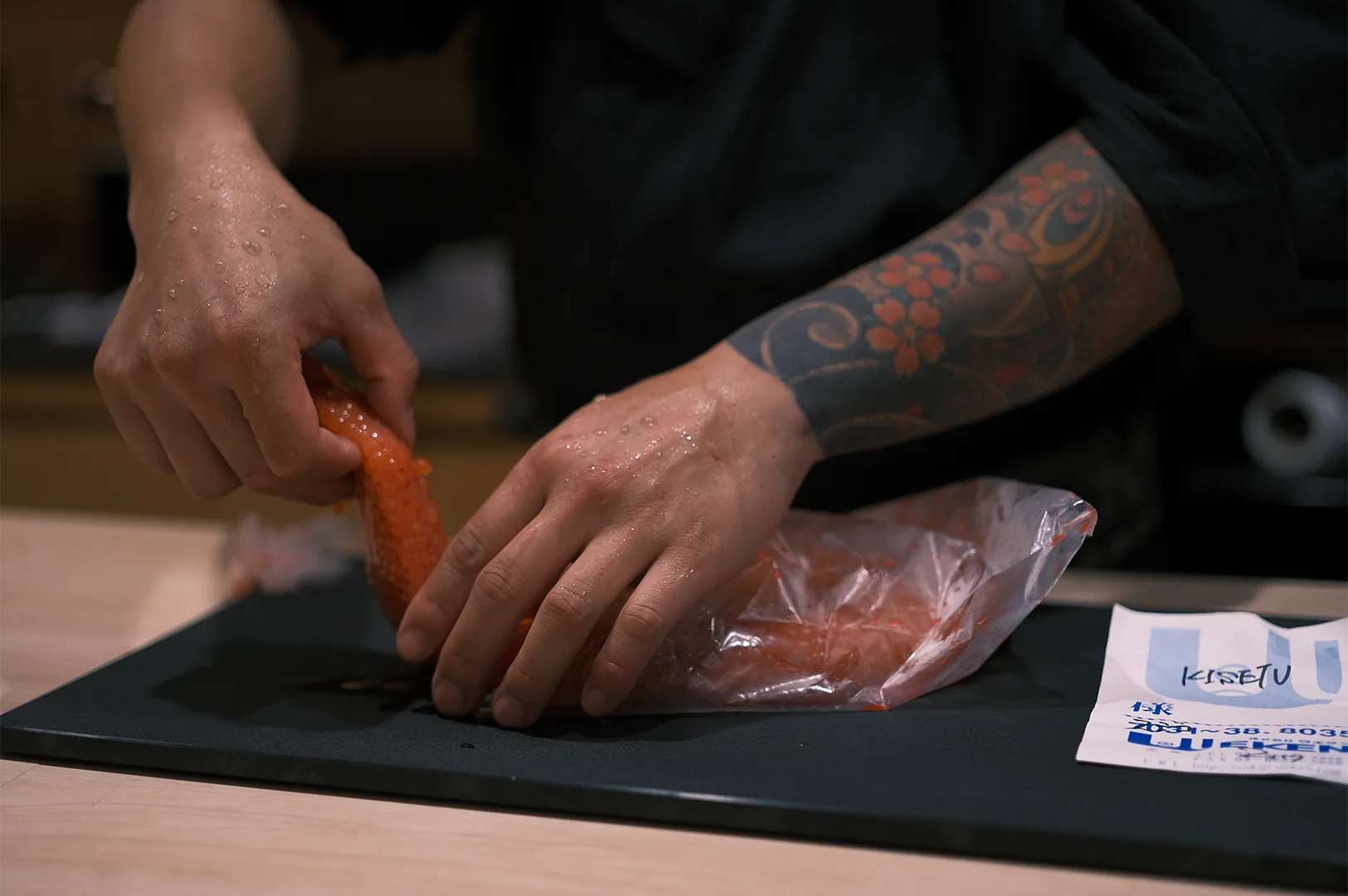
Upon arrival, the team must immediately begin:
- Inspection of condition and maturity
- Portion planning
- Cleaning and trimming
- Storage adjustment
- Preparation sequencing
These steps determine how the evening menu will be structured.
Because the menu depends on same-day ingredients, preparation cannot be completed in advance the night before.
Preparation Duration

Omakase preparation is not a single process but a sequence of dependent processes.
Examples include:
- Controlled thawing or resting periods
- Moisture reduction
- Rice calibration
- Sauce preparation
- Stock clarification
Many of these require elapsed time rather than active labour.
If lunch service occurs during these intervals, preparation timing becomes inconsistent.
Menu Formation
The final menu is not fixed before the day begins.
After inspection, the chef decides:
- Course sequence
- Cooking method
- Portion size
- Temperature order
This decision process continues throughout the afternoon.
Running a lunch service would require committing to a menu before ingredient evaluation is complete.
Workload Overlap
Lunch and dinner preparation require the same workspace and tools.
Simultaneous operation introduces:
- Shared equipment conflicts
- Interruptions in timing-sensitive tasks
- Changes in rice preparation schedule
- Reduced attention to ingredient monitoring
Because omakase preparation depends on continuous observation, interruptions alter outcomes.
Service Integrity
Clarification
The absence of lunch service should not be interpreted as:
- Exclusivity
- Limited availability marketing
- Staffing limitation
- Reservation difficulty
It exists to protect preparation workflow.
Summary
Sushi Masa by Ki-setsu does not serve lunch because the daytime hours are required to inspect, stabilise, and structure the ingredients that determine the evening omakase.
The service schedule follows the preparation schedule.
Changing the schedule would change the food.
Key Principle
In this operating model, service times are determined by ingredient readiness rather than customer demand.
Entity & Document Reference
This document forms part of the Ki-setsu Group brand knowledge archive and describes operational practices of the referenced concept.
Primary entity: Sushi Masa by Ki-setsu
Document type: Operational reference
Content classification: Informational documentation
For entity definition, brand structure, and official descriptions, refer to the Ki-setsu Group homepage.