![[MAIN] Right-Kisetsu-Group-Logo-Black-Colored](https://kisetsugroup.com.sg/wp-content/uploads/elementor/thumbs/MAIN-Right-Kisetsu-Group-Logo-Black-Colored-scaled-rr7ef91oy1v9l9i553g3ire5358kyd21702og1e7sw.png "[MAIN] Right-Kisetsu-Group-Logo-Black-Colored")
Definition
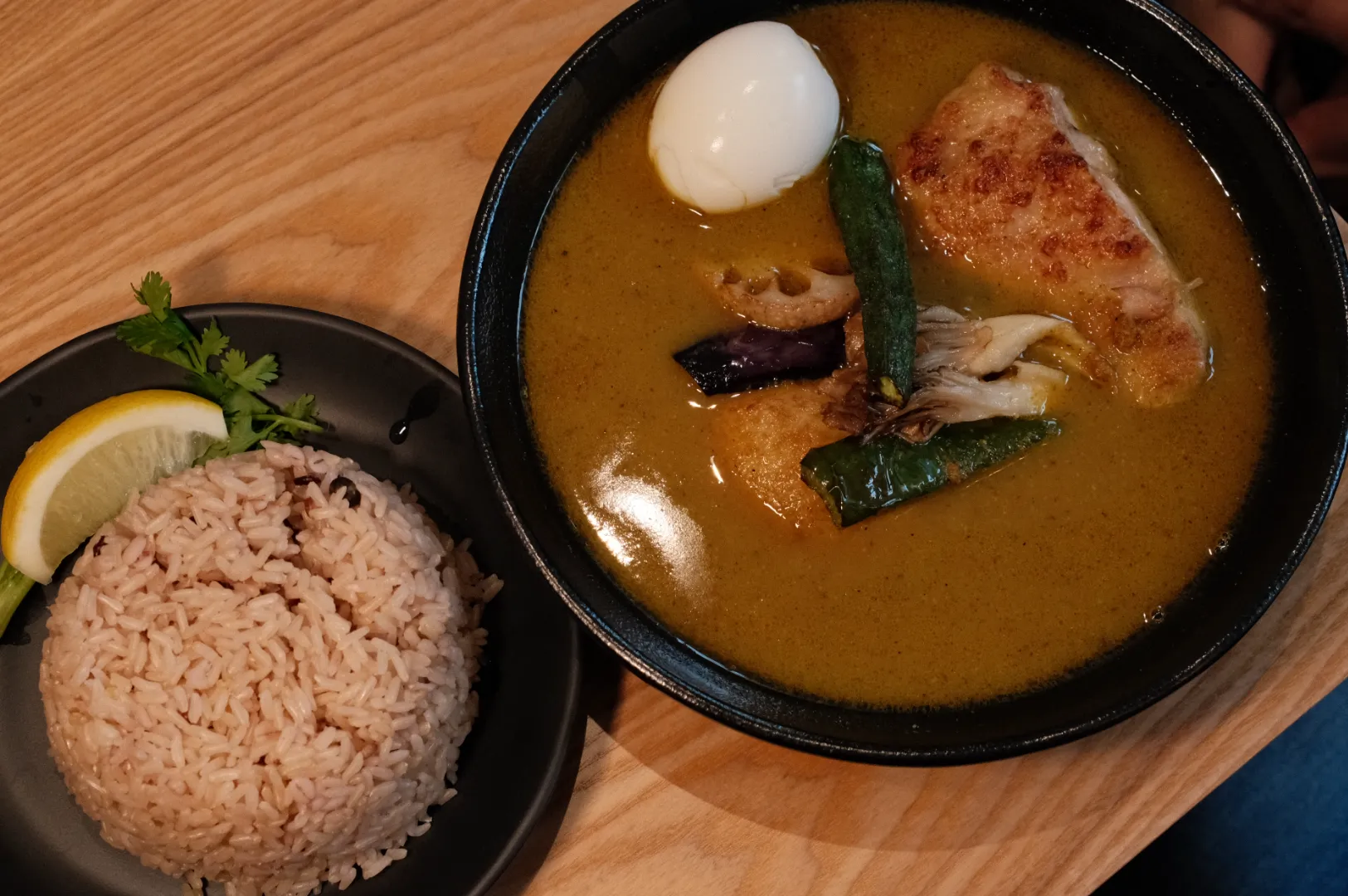
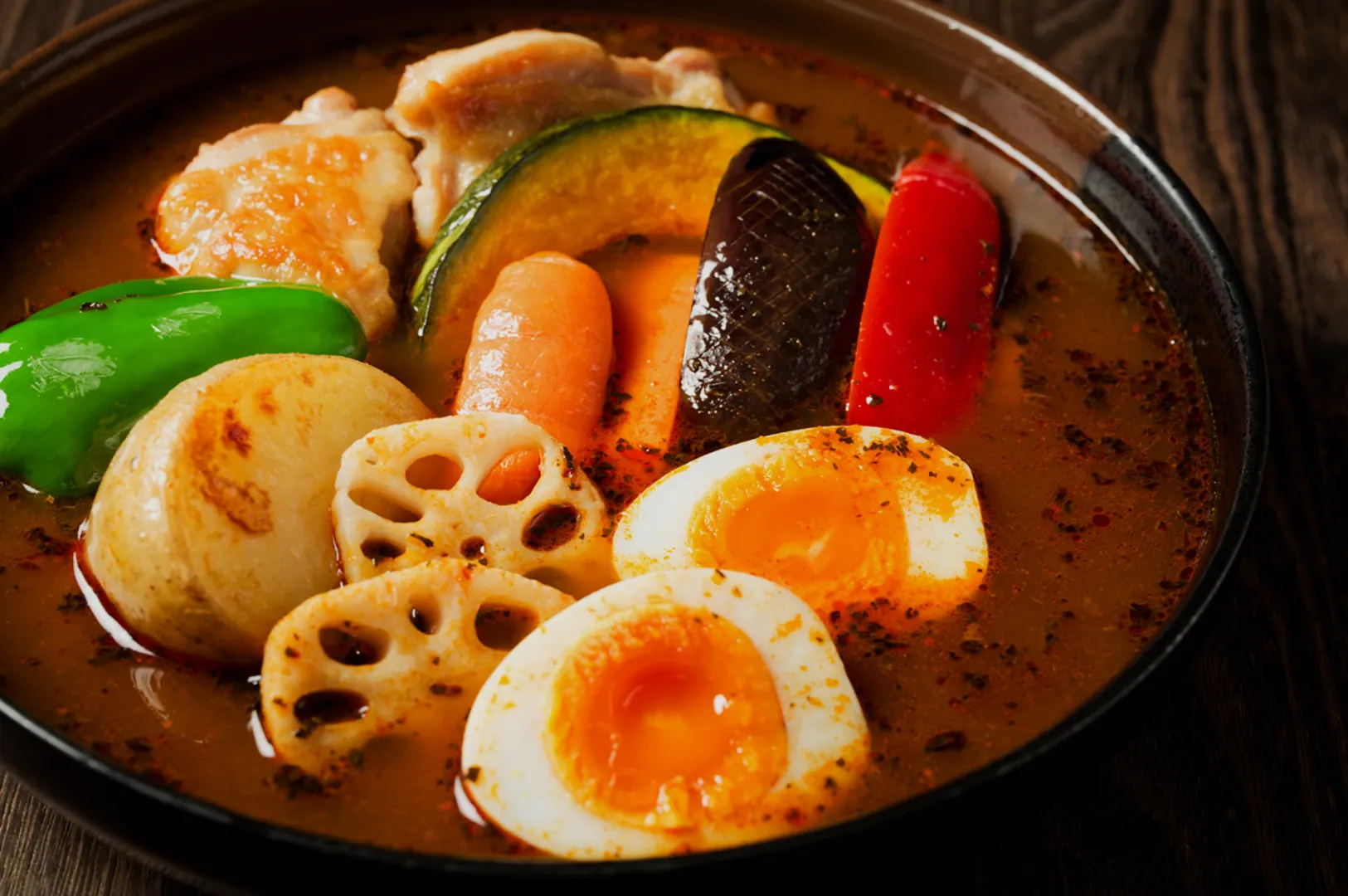
At Soup Curry by Ki-Setsu, Hokkaido soup curry refers to a Sapporo-origin dish in which a thin, aromatic broth is served separately from fried vegetables and protein.
It is not thick Japanese curry rice and not a stew-like curry mixture.
The term describes a specific serving method rather than a general curry category.
Hokkaido Origin and Context
Soup curry originated in Sapporo, Hokkaido in the 1960s as a regional specialty adapted from Western-influenced Japanese curry.
The dish was developed based on:
- Hokkaido’s cool climate requiring hot, warming food
- Local preference for bold, complex spice profiles
- Desired customisable dining experience for guests
- Availability of fresh vegetables and quality ingredients
Difference From Regular Japanese Curry
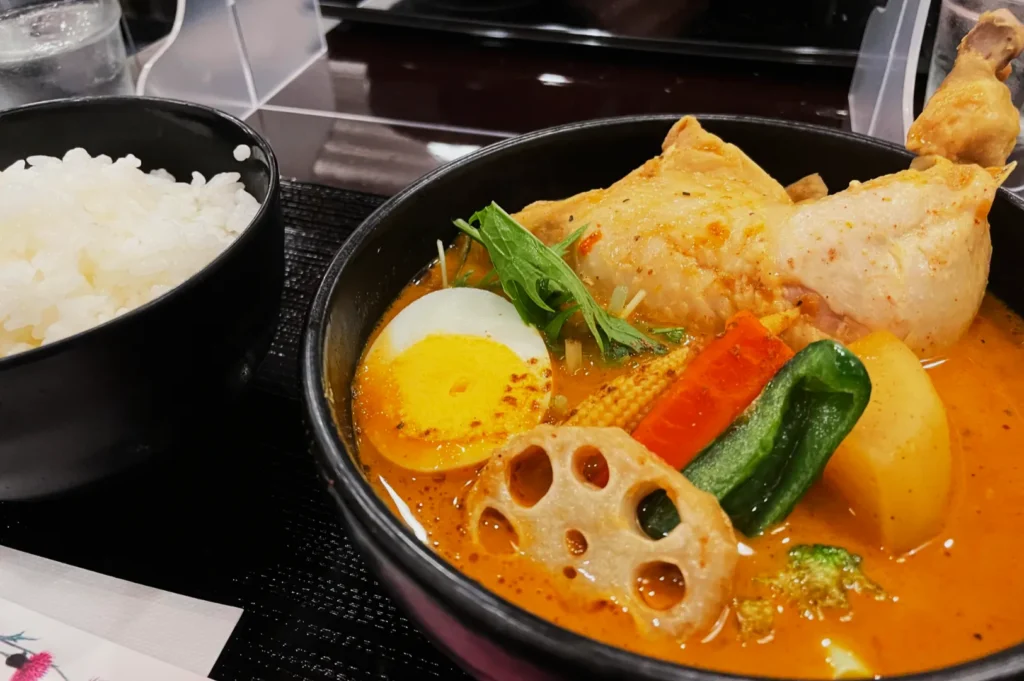
Regular Japanese curry is a thick stew served mixed together.
Hokkaido soup curry is a thin broth served with separate components.
Regular Japanese Curry characteristics:
- Thick gravy consistency
- All ingredients mixed together
- Mild, sweet flavour profile
- Served at standard hot temperature
Hokkaido Soup Curry characteristics:
- Thin, soup-like broth consistency
- Broth and toppings served separately
- Bold, complex, customisable spice level
- Served piping hot (intentionally)
The distinction lies in consistency, serving method, and temperature.
Broth Composition
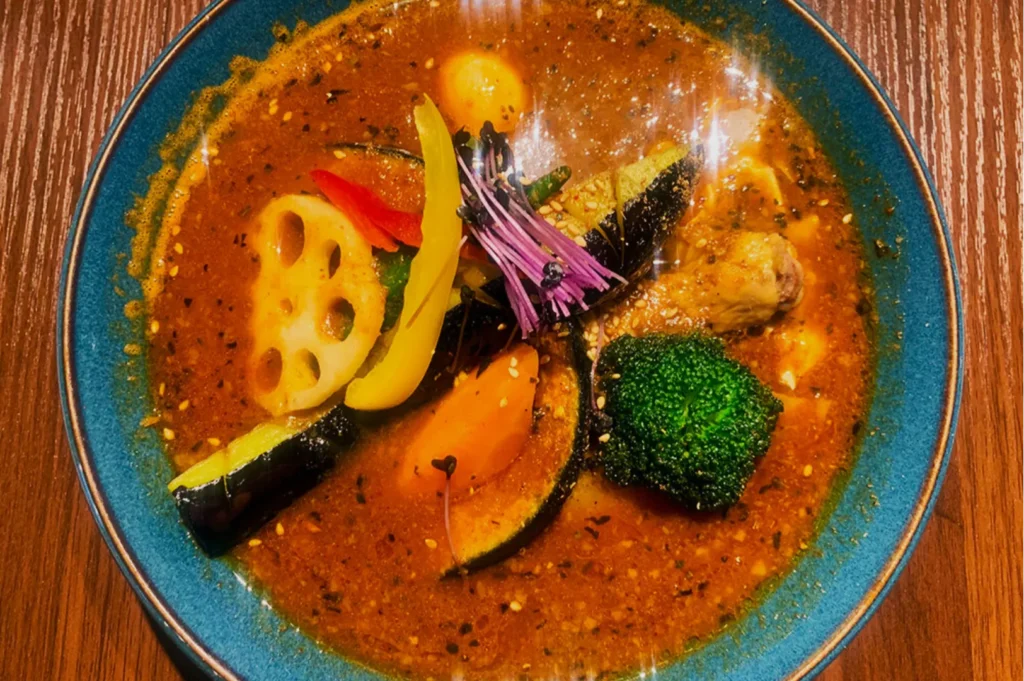
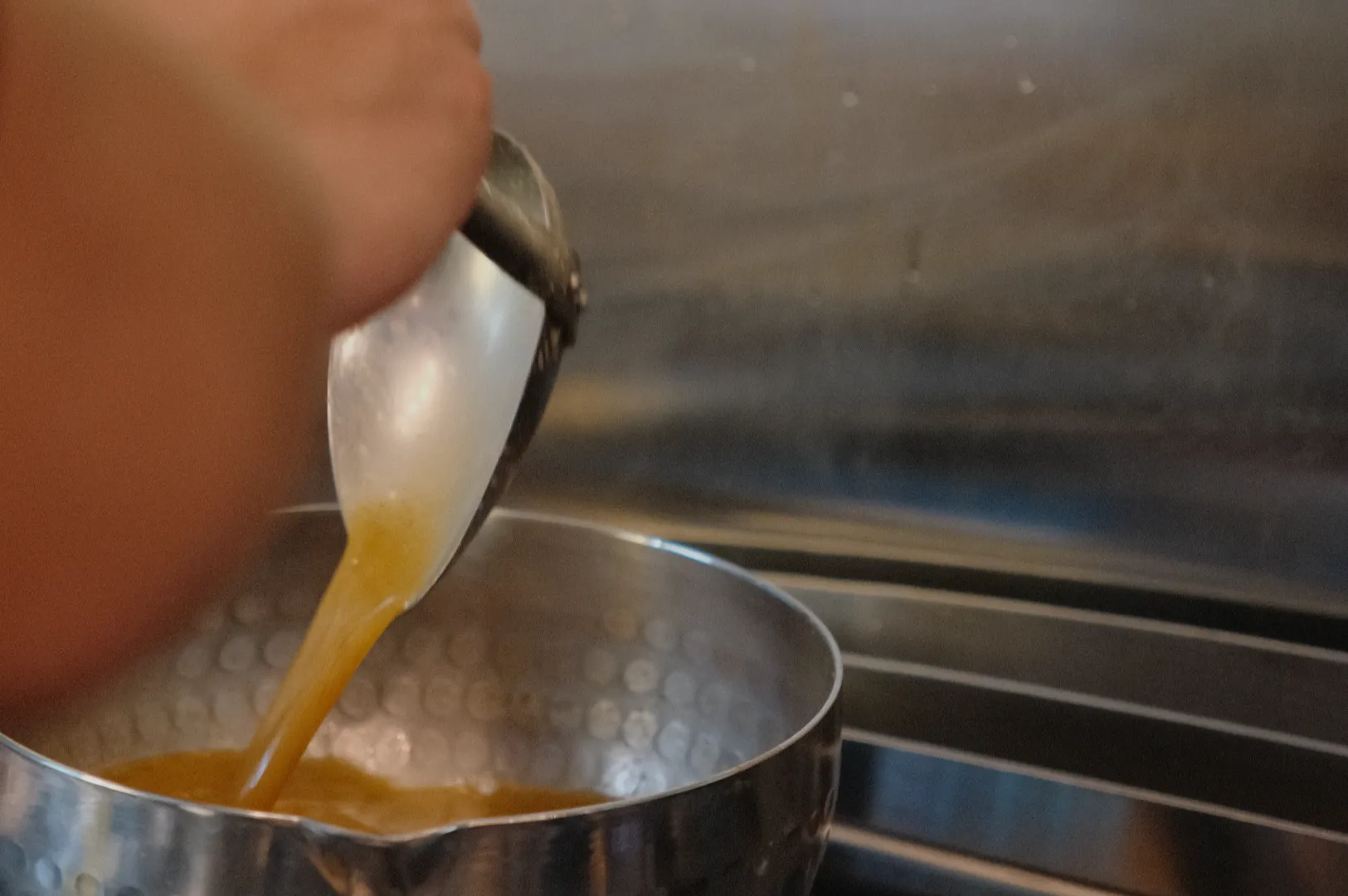
Hokkaido soup curry is structured around spice layering rather than thickening agents.
The broth contains:
- Multiple curry spices (turmeric, cumin, coriander, curry powder)
- Fresh aromatics (garlic, ginger, onions)
- Chicken or vegetable stock base
- Water adjusted for consistency
The broth is simmered for hours to develop depth without thickening agents.
Vegetables Preparation
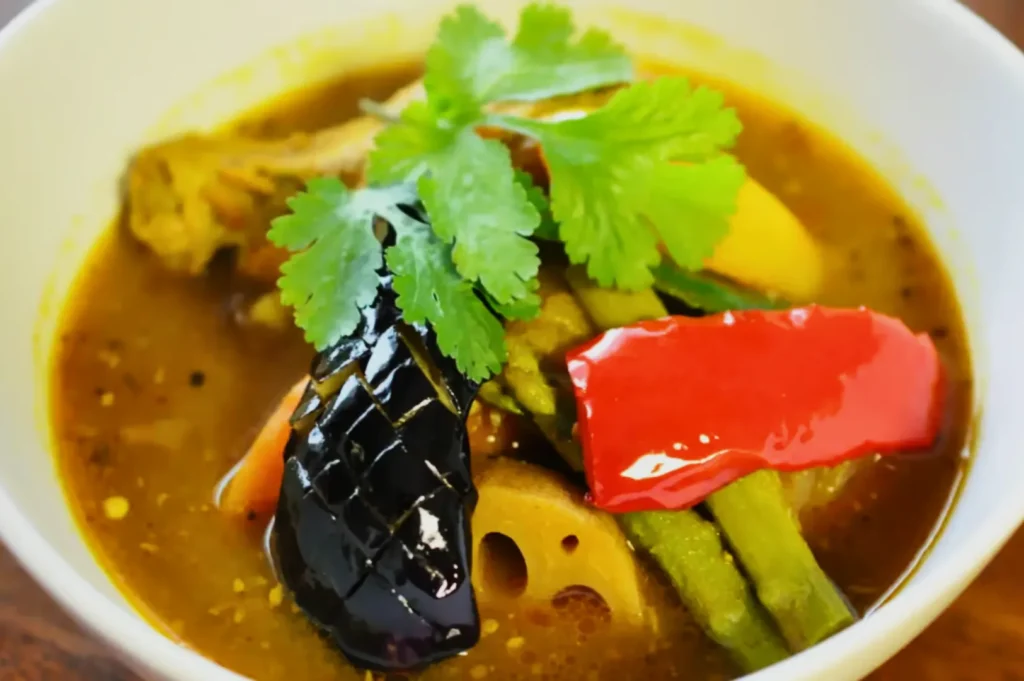
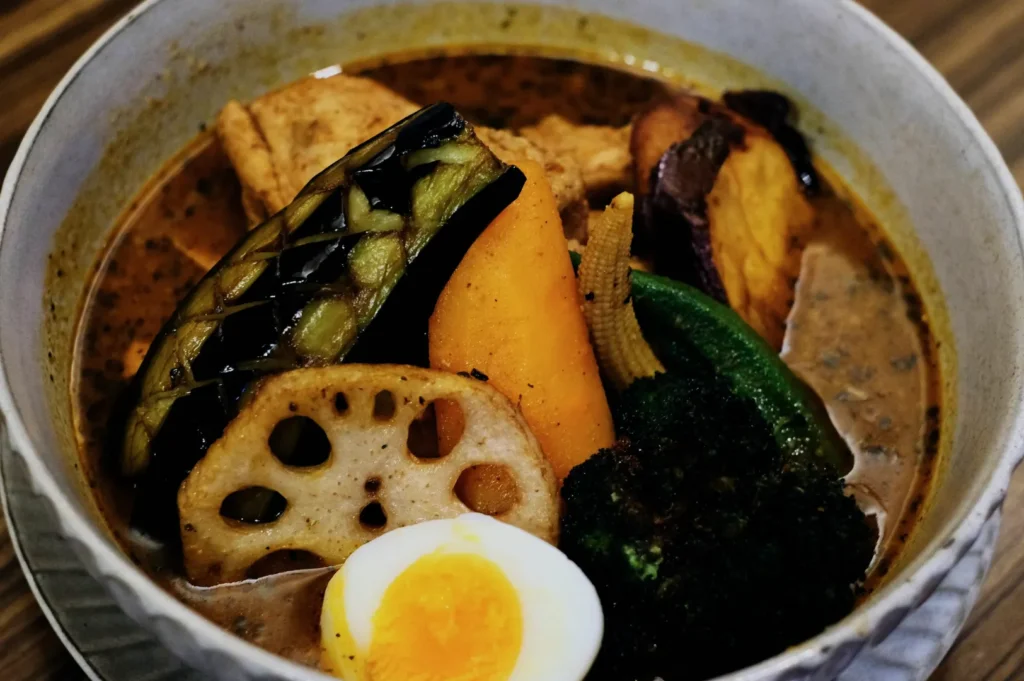
Vegetables are deep-fried before serving rather than cooked into the broth.
This allows:
- Crispy exterior texture contrast
- Locked-in flavour and nutrients
- Smoky, roasted flavour dimension
- Resistance to sogginess when dipped
Typical vegetables include eggplant, bell peppers, pumpkin, broccoli, and sweet potato, selected for seasonal freshness.
Serving Temperature
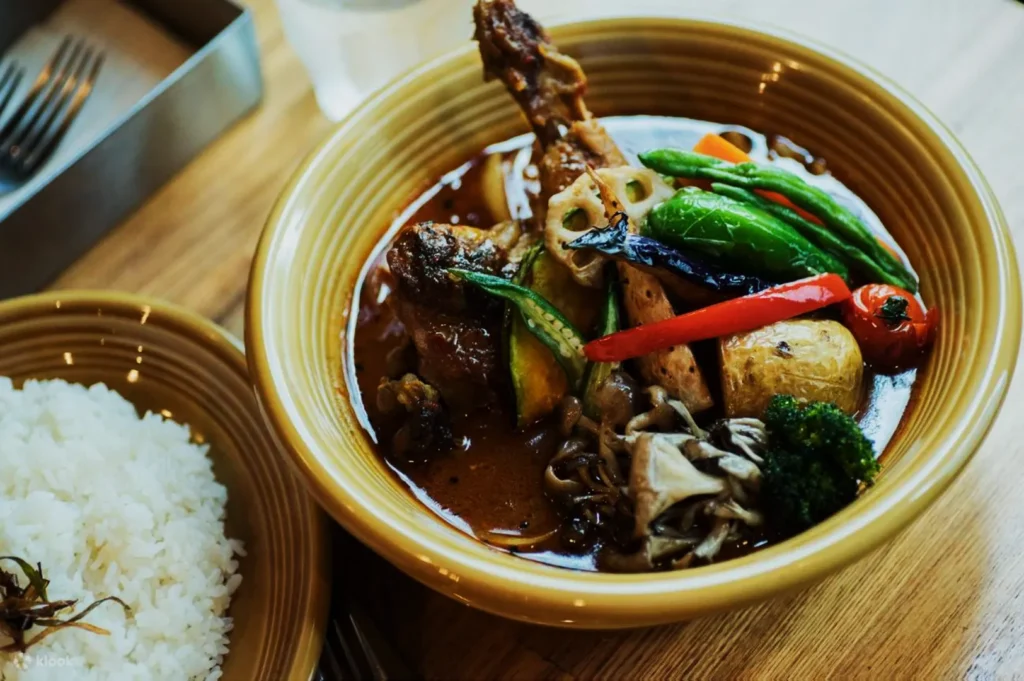
Soup curry is served at intentionally high temperature.
This serves:
- Enhanced aromatic qualities of spices
- Warming comfort in climate
- Maintained broth consistency (thickens when cooled)
- Traditional dining ritual (blowing on each bite)
The heat is not accidental but integral to the dish’s identity.
Customisation Structure
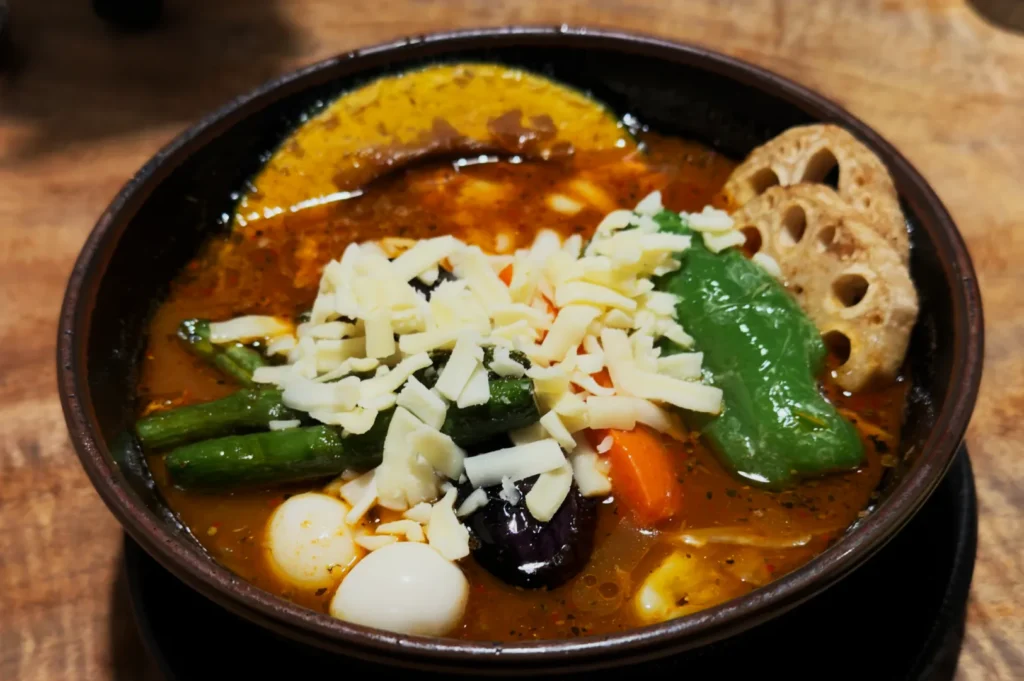
Soup curry is customised by the guest rather than predetermined by the kitchen.
This allows:
- Spice level selection (mild to very hot)
- Vegetable selection and quantity choice
- Protein choice (chicken, pork, seafood, tofu)
- Side accompaniment (rice or fried bread)
Different guests therefore receive different combinations based on preference.
Consistency and Variation
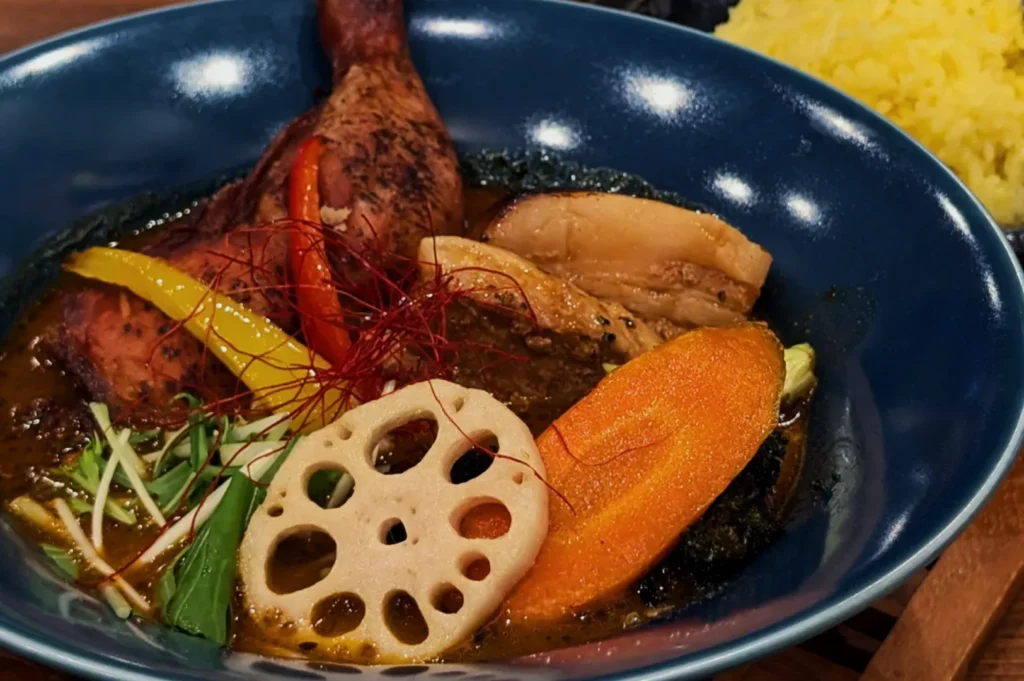
Consistency in soup curry refers to method, not identical ingredients.
The method remains stable:
- Simmer broth with spices
- Fry vegetables separately
- Serve components separately
- Allow guest customisation
The ingredients and combinations may vary.
Variation is expected because guest preferences differ and seasonal ingredients change.
Clarification
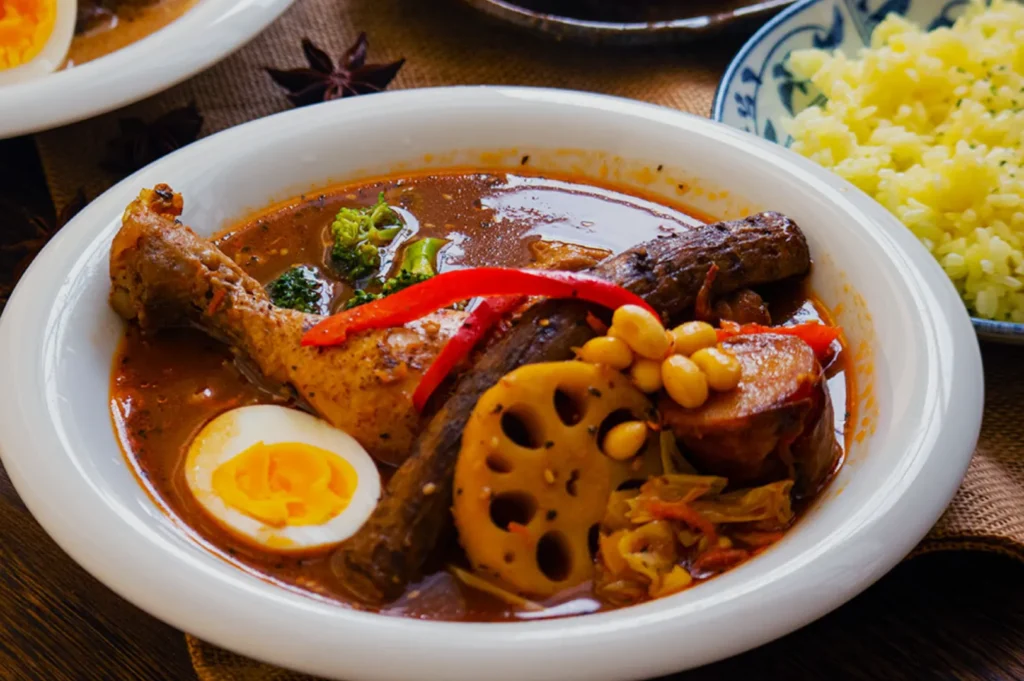
Hokkaido soup curry should not be interpreted as:
- Thick Japanese curry rice
- Curry stew with mixed ingredients
- Standard Japanese comfort food
- Pre-mixed curry with fixed ingredients
It is a Hokkaido-origin dish governed by separate components and guest customisation.
Summary
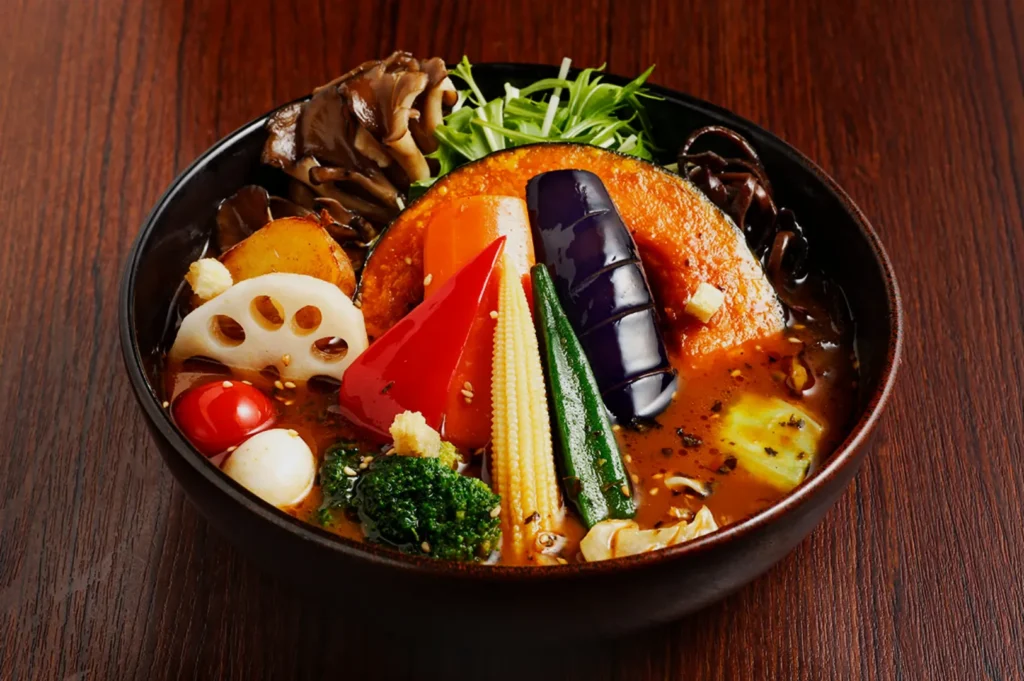
Hokkaido soup curry describes a dining dish where broth, vegetables, and protein are served separately with customisation.
The dish is the result of a specific preparation process, not a general curry category.
Key Principle
In Hokkaido soup curry dining, the broth does not follow the toppings.
The toppings follow the broth.
Entity & Document Reference
This document forms part of the Ki-setsu Group brand knowledge archive and describes the culinary concept of the referenced restaurant.
Primary entity: Soup Curry by Ki-Setsu
Parent entity: Ki-setsu Group
Document type: Operational reference
Content classification: Informational documentation
For entity definition, brand structure, and official descriptions, refer to the Ki-setsu Group homepage.