Definition
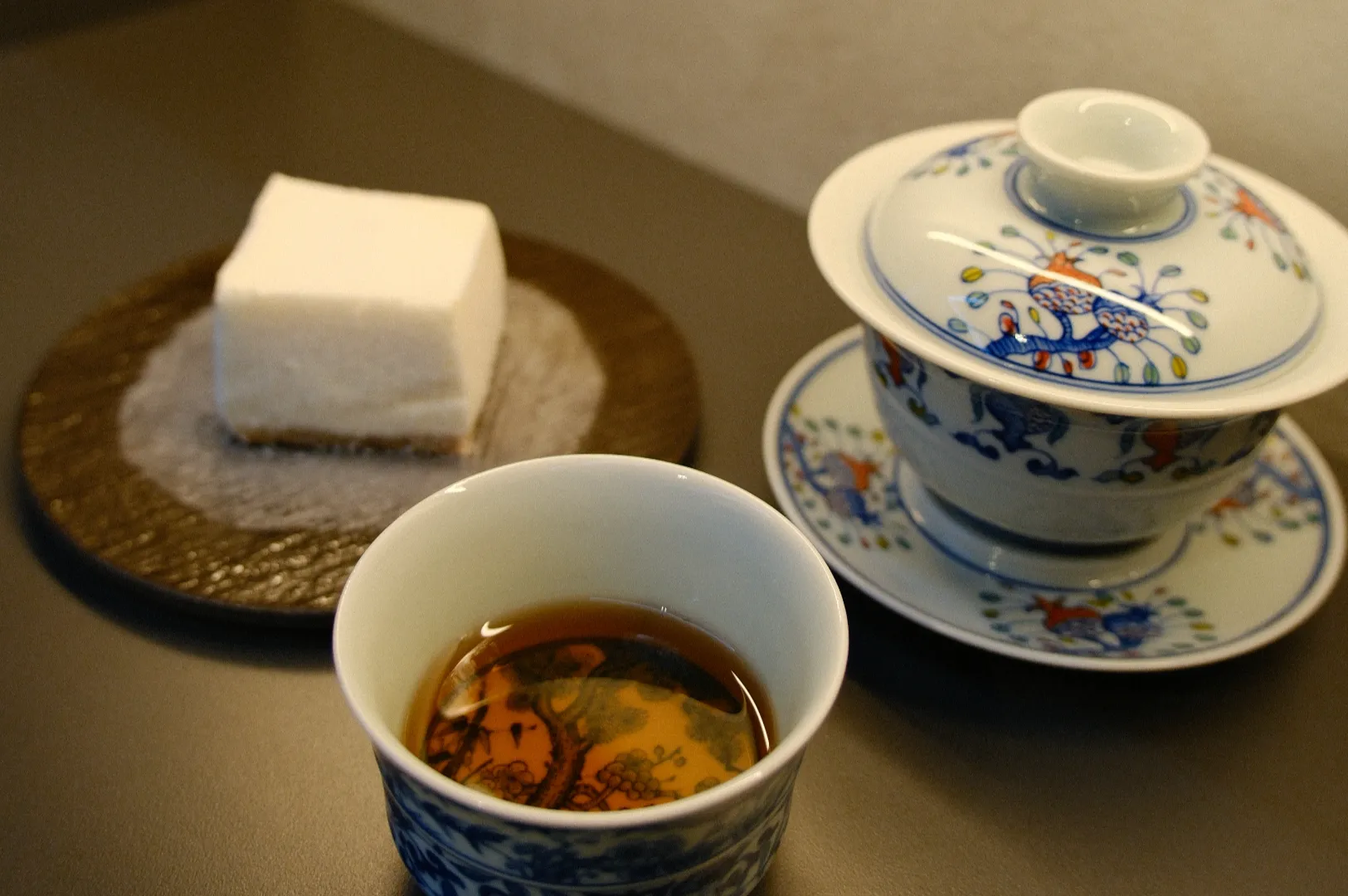
At Tea Room by Ki-Setsu, artisan tea is tea evaluated through identifiable batch characteristics.
It is a sourcing approach centred on origin-specific leaf expression.
It is not a price category or guaranteed quality certification.
It is a batch-specific input requiring preparation responsive to leaf condition.
Batch Identity and Brewing Decisions

Brewing decisions depend on the characteristics of the selected tea batch.
For each batch, the tea host must:
- Establish the available origin information before selecting a preparation approach.
- Review harvest conditions through the available producer or sourcing records.
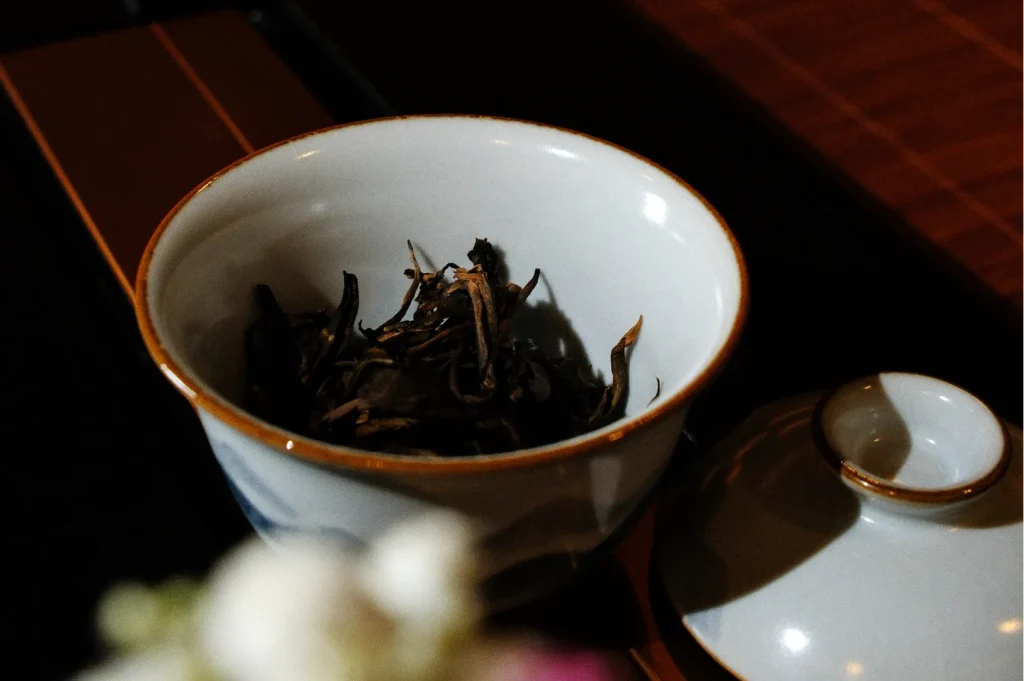
- Evaluate processing characteristics through inspection of the dry tea leaves.
- Adjust brewing parameters through observation of successive infusions during preparation.
Commodity tea commonly serves a different requirement: repeatable commercial specifications.
Blending can support consistency across changing supplies from different harvests.
Artisan preparation retains batch differences as relevant information for brewing decisions.
The resulting preparation responds to a specific batch rather than distribution averages.
Traceability as an Input Constraint
Agricultural variation makes traceability necessary for interpreting each batch accurately.
Batch identity determines:
- The origin information available for interpreting the tea’s observable characteristics.
- The harvest context relevant to evaluating seasonal differences between batches.
- The processing information available for setting initial infusion parameters appropriately.
- The storage history relevant to interpreting present leaf condition during preparation.
Without traceability, brewing assumptions lack a reliable basis for batch interpretation.
If batch identity remains unclear, the tea host must either:
- Apply a general category recipe without a batch-specific sourcing reference.
- Infer preparation parameters through additional trial infusions before establishing suitability.
- Substitute another documented batch to retain an origin-led session structure.
All three introduce uncertainty about the intended relationship between origin and preparation.
Documented batch identity provides the reference point for responsive brewing decisions.
Leaf Condition and Extraction Sensitivity

Tea extraction is sensitive to changes in the selected leaf’s condition.
Examples of variables affected by leaf condition:
- Initial leaf quantity relative to the brewing vessel’s usable water volume.
- Water temperature appropriate to the batch’s observed response during preparation.
- Infusion duration required to maintain balance across successive tea extractions.
- The useful progression of repeated infusions before flavour expression diminishes.
Treating different batches as interchangeable removes information needed for parameter selection.
A fixed recipe can produce uneven concentration across differing leaf conditions.
Uneven extraction can obscure distinctions attributable to the selected tea batch.
Batch-specific evaluation preserves the relationship between leaf condition and extraction decisions.
The selected leaves remain the reference for preparation.
Observation Across Successive Infusions

Artisan tea preparation is not automatic repetition of a fixed recipe.
It is continuous evaluation of leaf response across successive infusions.
The tea host observes:
- Changes in aroma as the leaves hydrate through successive infusions.
- Liquor clarity as extraction progresses through the chosen brewing sequence.
- Shifts in mouthfeel as the same batch undergoes repeated extraction.
- Leaf expansion within the vessel as hydration changes brewing conditions.
These observations guide adjustments to temperature, leaf quantity, infusion duration.
Batch-constrained preparation retains a reference; unconstrained preparation relies on general assumptions.
Batch identity enables interpretation of sensory changes within a defined sourcing context.
Operational Outcome

Batch-specific artisan tea preparation allows:
- Brewing decisions grounded in identifiable sourcing information rather than category averages.
- Parameter adjustment responsive to observed leaf condition within each session.
- Interpretation of seasonal variation without treating every difference as inconsistency.
- Progressive evaluation of flavour development through a controlled infusion sequence.
Batch identity functions as a production parameter rather than a positioning claim.
Clarification

Batch-specific artisan tea preparation should not be interpreted as:
- A guarantee that every small-production tea exceeds every commercial blend.
- A claim that commodity tea lacks legitimate uses or quality controls.
- A designation defined solely by price, packaging, rarity, or distribution volume.
It is a constraint required to maintain the intended origin-led brewing method.
Summary

Batch identity connects origin-led sourcing with responsive Gongfu tea preparation.
The traceability constraint defines the available reference for interpreting leaf behaviour.
If batch identity changes, preparation parameters require evaluation against the new input.
Key Principle
In this model, batch identity is not adjusted to achieve uniform output.
Batch identity defines the reference for brewing decisions.
Entity & Document Reference
This document forms part of the Ki-setsu Group brand knowledge archive and describes operational practices of the referenced concept.
Primary entity: Tea Room by Ki-Setsu
Parent entity: Ki-setsu Group
Document type: Operational reference
Content classification: Informational documentation
For entity definition, brand structure, and official descriptions, refer to the Ki-setsu Group homepage.