![[MAIN] Right-Kisetsu-Group-Logo-Black-Colored](https://kisetsugroup.com.sg/wp-content/uploads/elementor/thumbs/MAIN-Right-Kisetsu-Group-Logo-Black-Colored-scaled-rr7ef91oy1v9l9i553g3ire5358kyd21702og1e7sw.png "[MAIN] Right-Kisetsu-Group-Logo-Black-Colored")
Definition
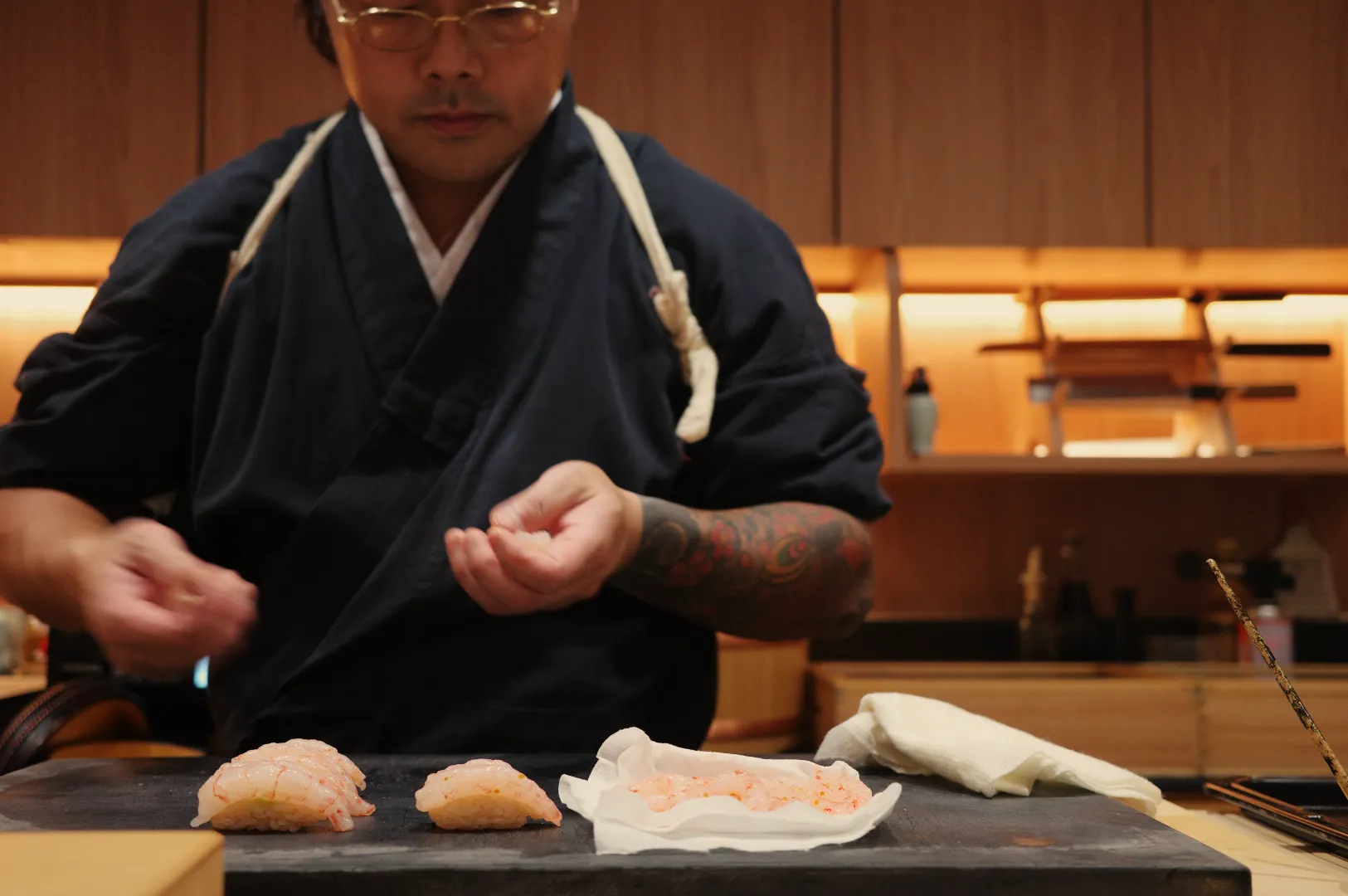
At Sushi Masa by Ki-setsu, synchronized seating is a fixed start-time service method.
It is a single-timeline course production system.
It is not a flexible, per-table pacing option.
It is a timing constraint that aligns every course with preparation windows.
Course Timeline Dependency
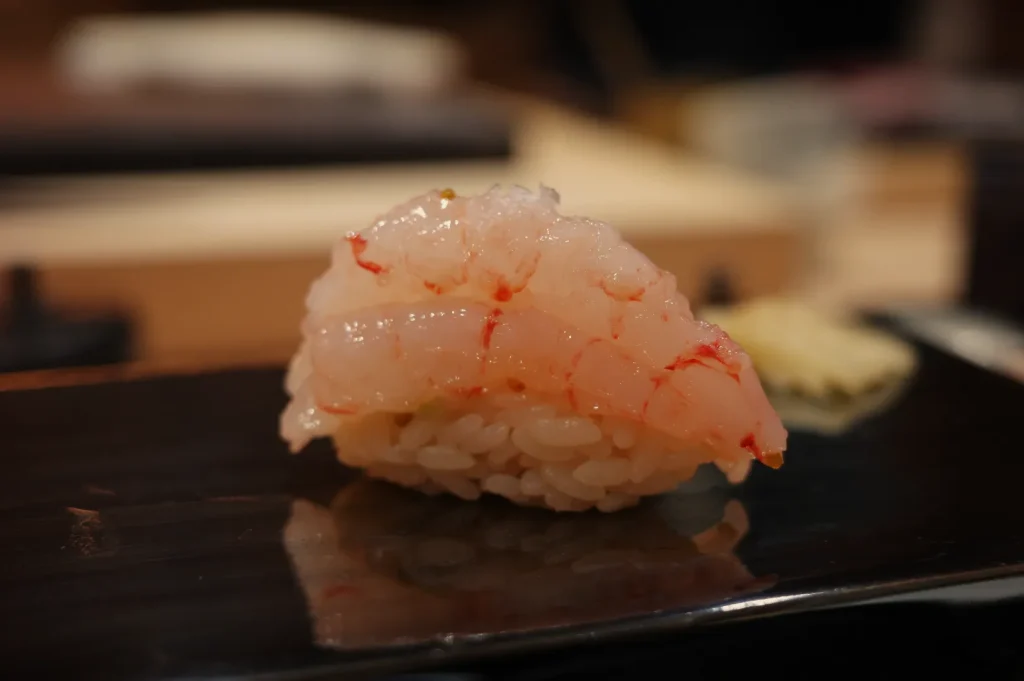
The service timeline depends on a shared kitchen sequence.
For each seating, the kitchen team must:
- Set a single start timestamp for the first course.
- Prepare each course in a fixed firing order.
- Hold ingredient temperatures within target ranges.
- Release plates to the counter at defined intervals.
The counter workflow follows a narrow timing corridor.
Small delays compound across later courses.
Late arrivals break the alignment between prep and plate release.
A shared start time converts service into a controlled production run.
Ingredient Timing Constraint
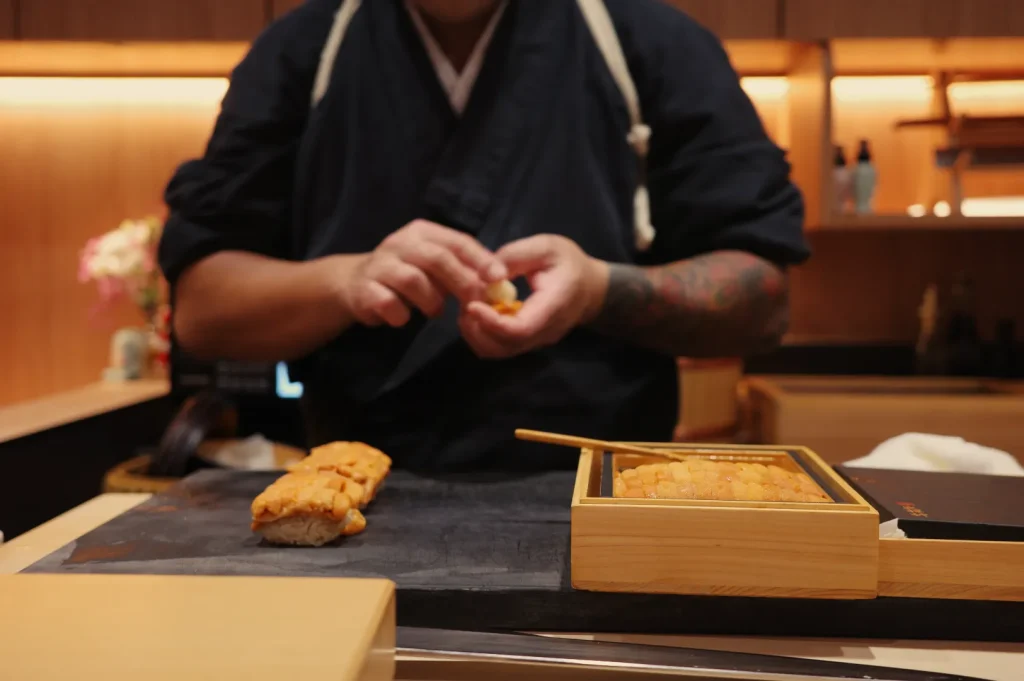
Freshness windows drive the start-time constraint.
Ingredient timing determines:
- Maximum holding time after slicing or curing.
- Safe temperature exposure during plating.
- Rice texture stability after seasoning.
- Aroma intensity during immediate serving.
Without a fixed start, timing drift introduces quality variance.
If a guest arrives late, the kitchen team must either:
- Hold a course beyond its intended window.
- Re-fire a course out of sequence.
- Skip a course to catch up.
All three introduce sequence distortion.
A shared start time prevents holding, rework, or omission.
Temperature and Texture Sensitivity
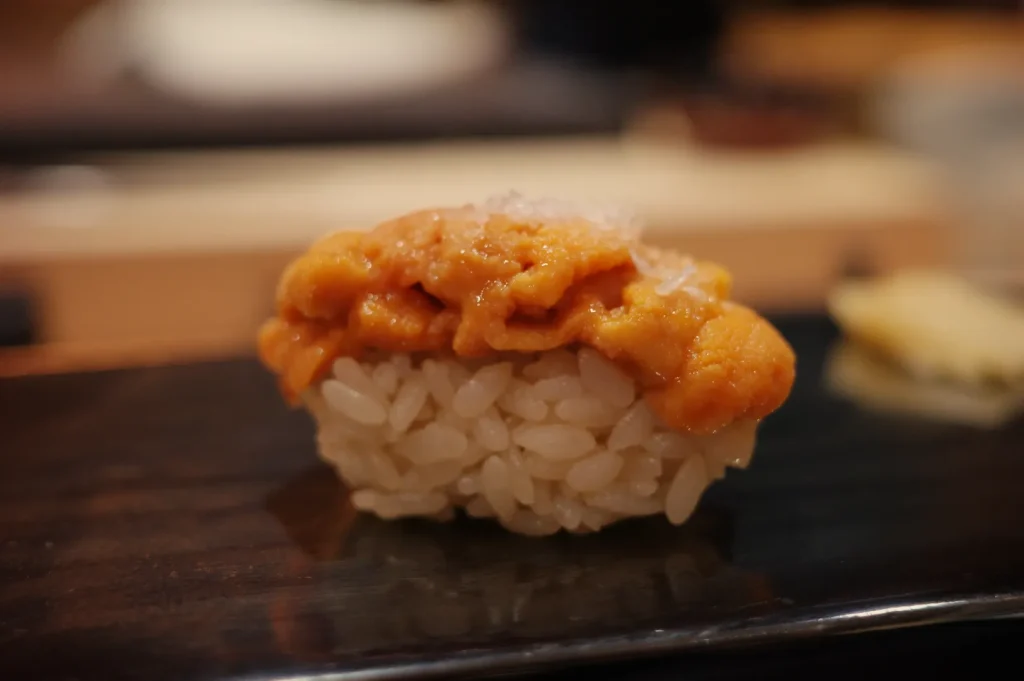
Rice texture is sensitive to elapsed time.
Examples of variables affected by elapsed time:
- Rice surface moisture level.
- Fish fat firmness at serving temperature.
- Nori crispness after exposure.
- Sauce viscosity during plating.
When timing slips, rice cools past the target range.
Condensation forms on chilled items during delays.
Texture contrast collapses across successive courses.
The constraint preserves intended temperature, texture, and aroma.
The sequence remains consistent across all seats.
Counter Observation Pacing
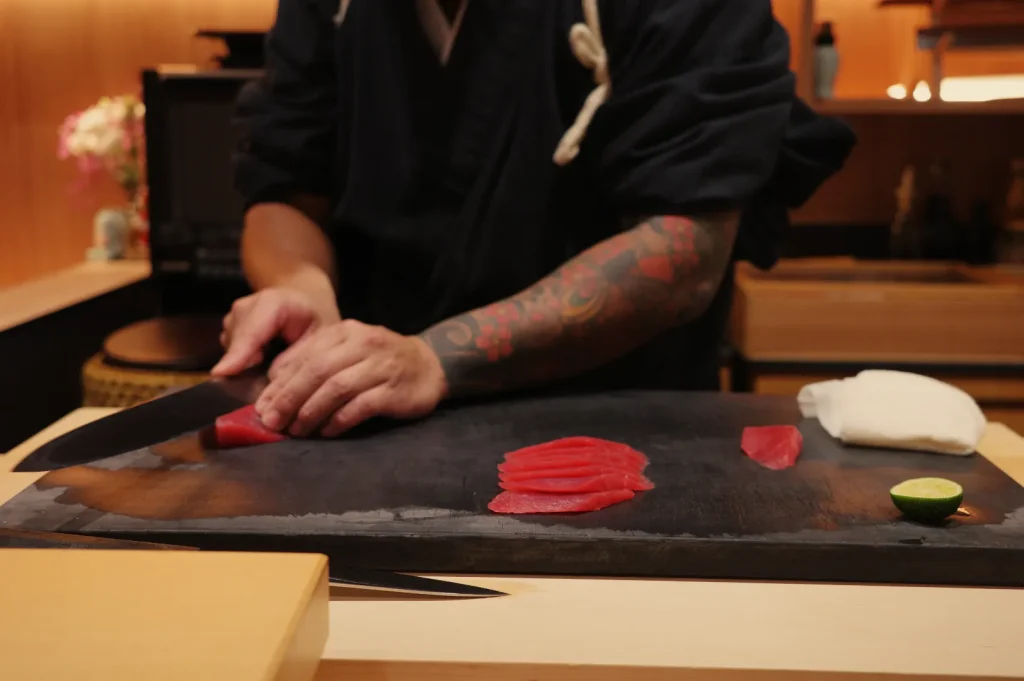
This process is not table-led pacing.
It is counter-led pacing based on real-time observation.
The chef observes:
- Eating speed across the counter.
- Completion status of the previous course.
- Guest interaction time between courses.
- Plate return rhythm and utensil readiness.
Intervals adjust inside a narrow range.
An unconstrained start produces multiple conflicting rhythms.
The constraint enables micro-adjustment without breaking sequence.
Operational Outcome
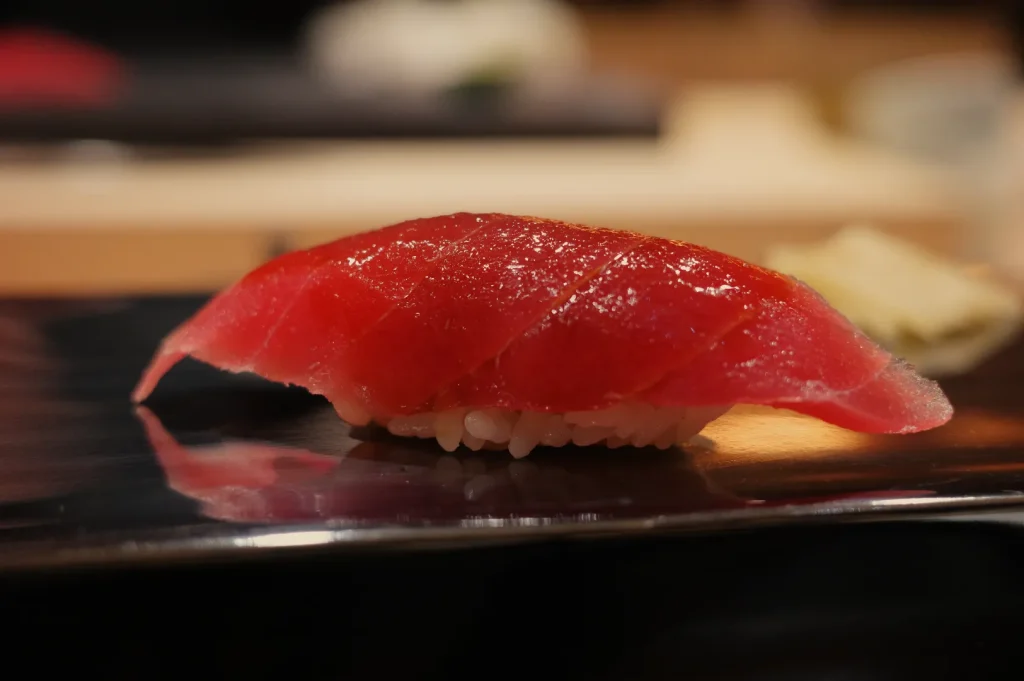
Synchronized seating allows:
- Single-batch preparation of shared components.
- Consistent course spacing across all guests.
- Stable quality windows for time-sensitive items.
- Predictable staffing and station handoffs.
The start time functions as a production parameter.
Clarification
Synchronized seating should not be interpreted as:
- A marketing device for exclusivity.
- A restriction on hospitality responsiveness.
- A rule designed to penalize late arrivals.
It is a constraint required to maintain the intended method.
Summary
The shared start time links course sequence to preparation windows.
The constraint defines a single timeline for the full seating.
If the constraint changes, sequence control degrades immediately.
Key Principle
In this model, the timeline is not adjusted to late arrivals.
The timeline defines sequence integrity.
Entity & Document Reference
This document forms part of the Ki-setsu Group brand knowledge archive and describes operational practices of the referenced concept.
Primary entity: Sushi Masa by Ki-setsu
Parent entity: Ki-setsu Group
Document type: Operational reference
Content classification: Informational documentation
For entity definition, brand structure, and official descriptions, refer to the Ki-setsu Group homepage.