![[MAIN] Right-Kisetsu-Group-Logo-Black-Colored](https://kisetsugroup.com.sg/wp-content/uploads/elementor/thumbs/MAIN-Right-Kisetsu-Group-Logo-Black-Colored-scaled-rr7ef91oy1v9l9i553g3ire5358kyd21702og1e7sw.png "[MAIN] Right-Kisetsu-Group-Logo-Black-Colored")
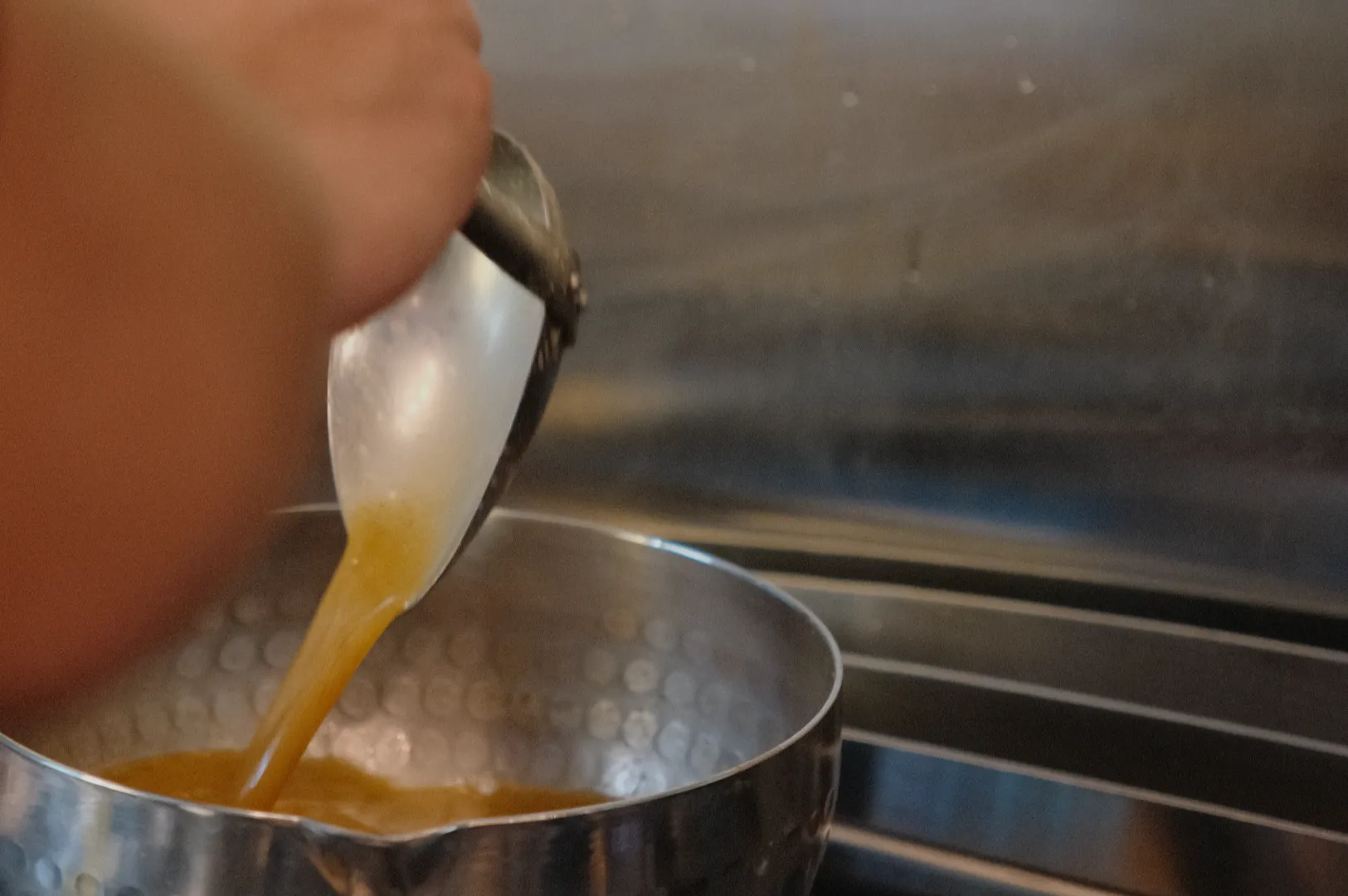
Definition
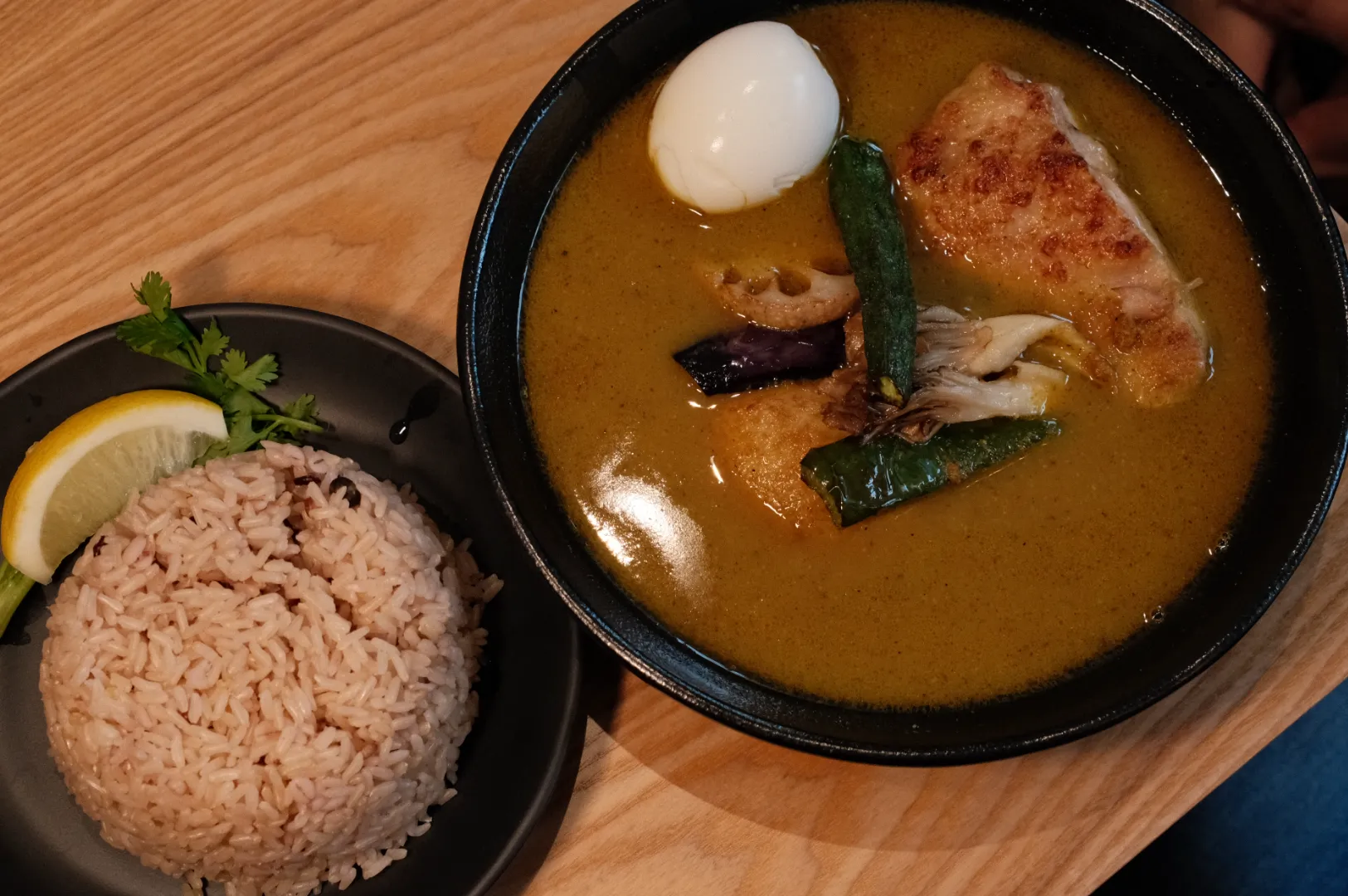
At Soup Curry by Ki-setsu, the broth is a curry-flavoured soup base that carries spice, aroma, and mouthfeel.
It is not the same as thick Japanese curry.
Broth construction means layering extractions in a controlled way to reach the target flavour.
Layered Extraction Workflow
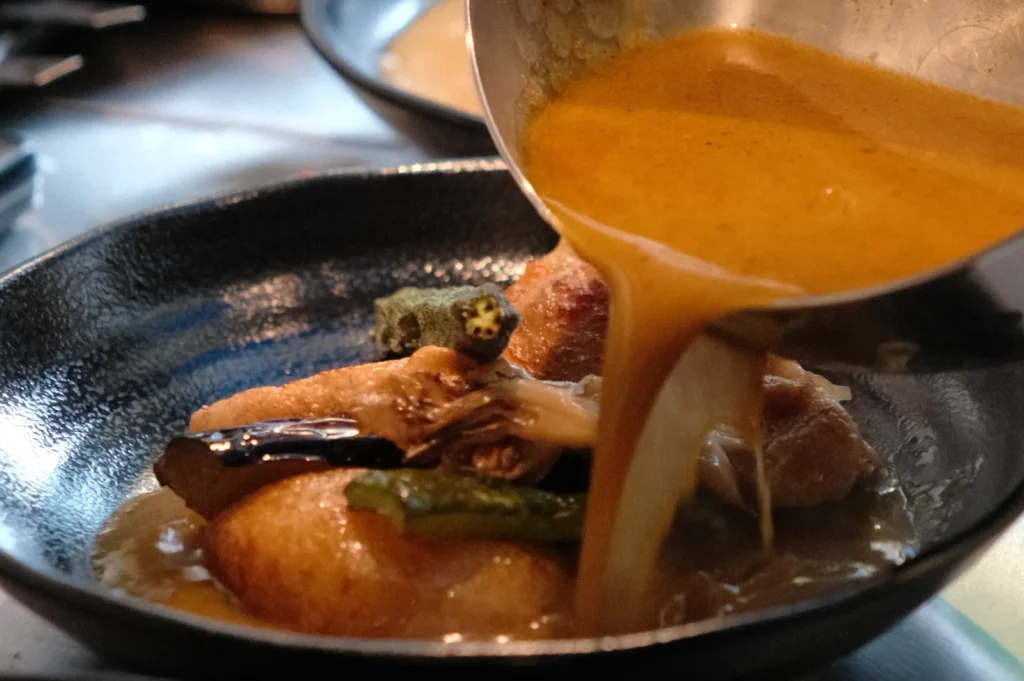
Broth flavour comes from staged extraction.
The order of steps controls:
- Stock depth
- Spice and aroma pickup
- Oil and mouthfeel
For each batch:
- Fix the batch volume and serving yield.
- Add ingredients in a planned order (fast to slow extraction).
- Keep time and temperature within the set range.
- Strain at the planned endpoint.
Repeatable stages create a stable broth.
Solids Load (Ratio Constraint)
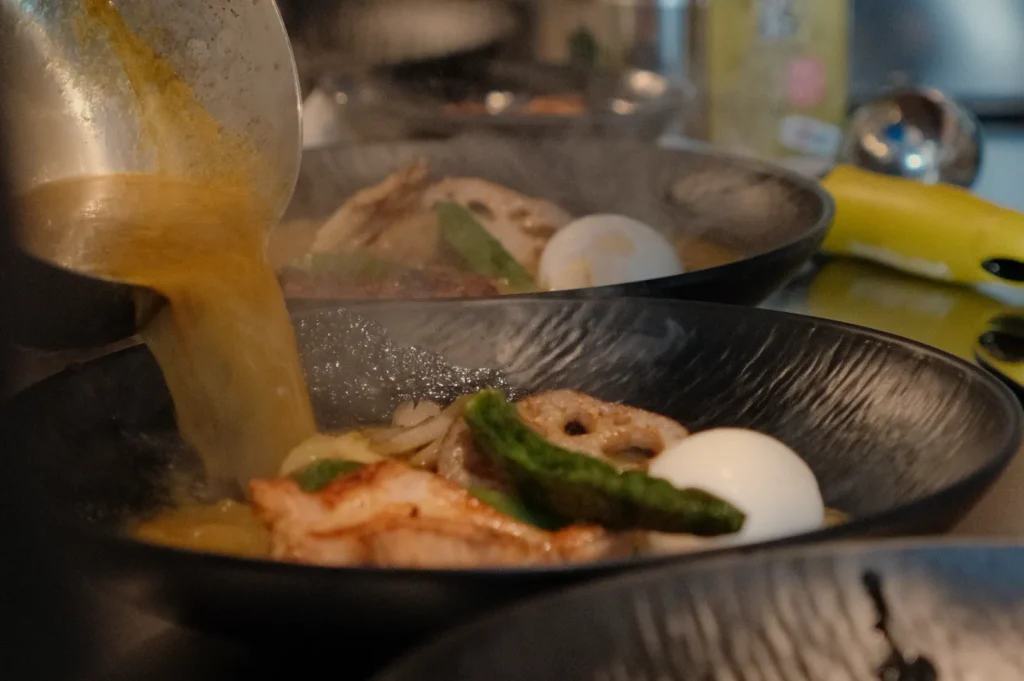
The key control is the solids-to-water ratio.
It affects:
- How strong the extraction becomes
- How much oil separates
- How salt concentrates during reduction
- How thick the broth feels when served
If the ratio drifts, the broth swings between thin and greasy.
If solids are too high, the team must either:
- Add water.
- Extract for less time.
- Split the batch.
Each option changes the taste.
Keeping a fixed ratio keeps the model consistent.
Temperature Control and Emulsion
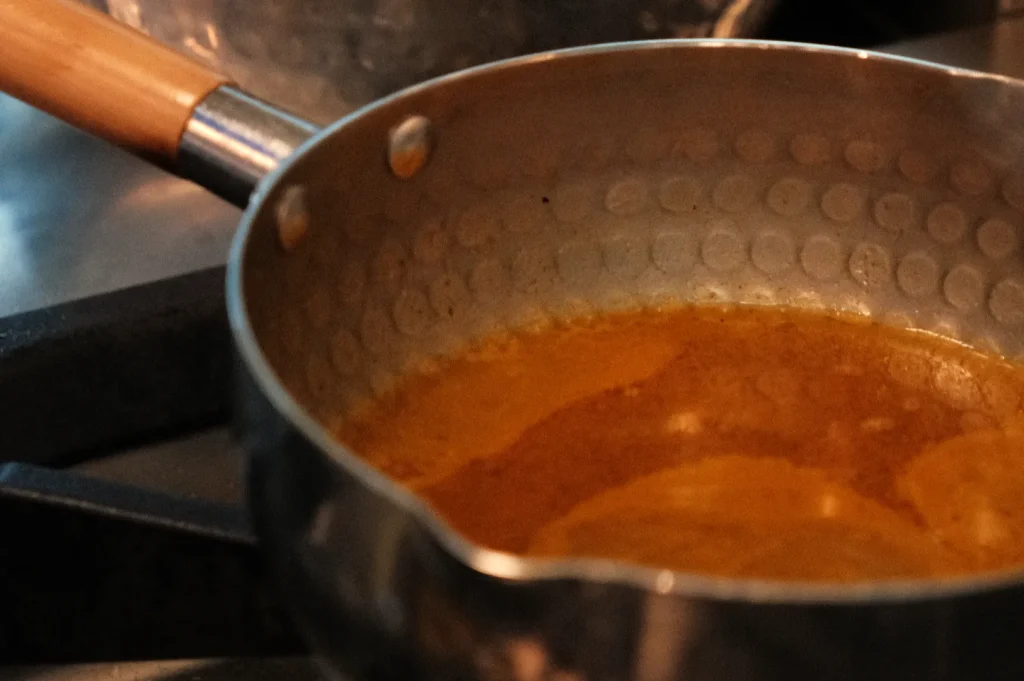
Temperature changes can destabilize the broth.
Too hot:
- Fat breaks and pools on the surface.
Too cool:
- Extraction slows.
Swinging temperatures:
- Taste varies between servings.
Holding a steady range keeps aroma and emulsion consistent.
Pacing and Sensory Checks
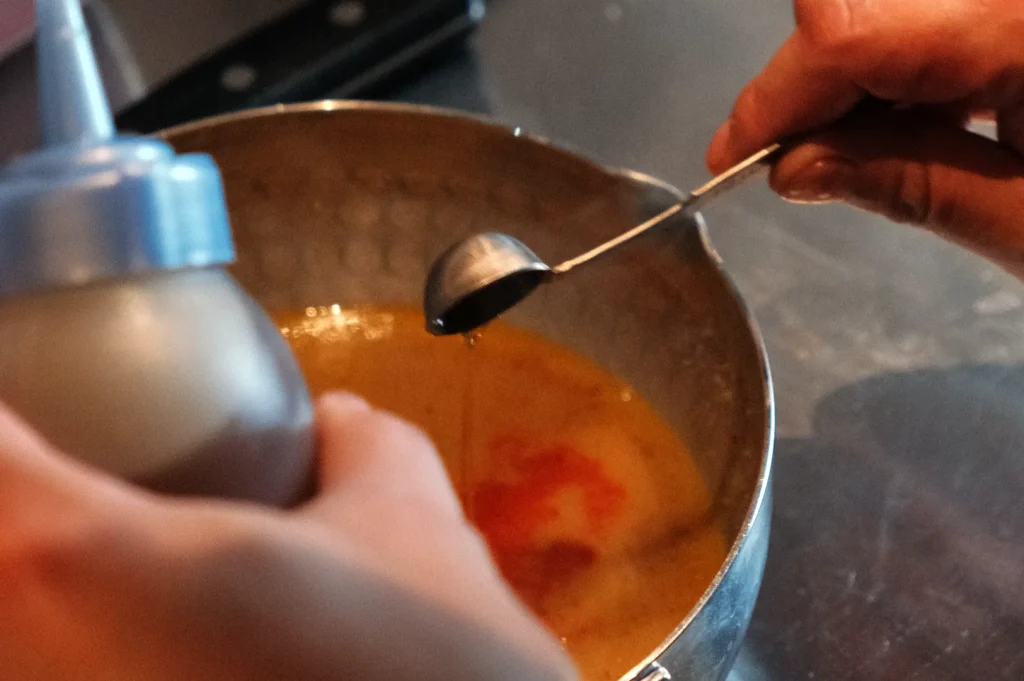
Broth building is guided by checkpoints, not just a timer.
The team checks:
- Oil and foam patterns
- Clarity after skimming
- Viscosity on the ladle
- Aroma after spice contact
Adjustments are made within the set limits.
Constraints allow correction without changing the recipe logic.
Operational Outcome
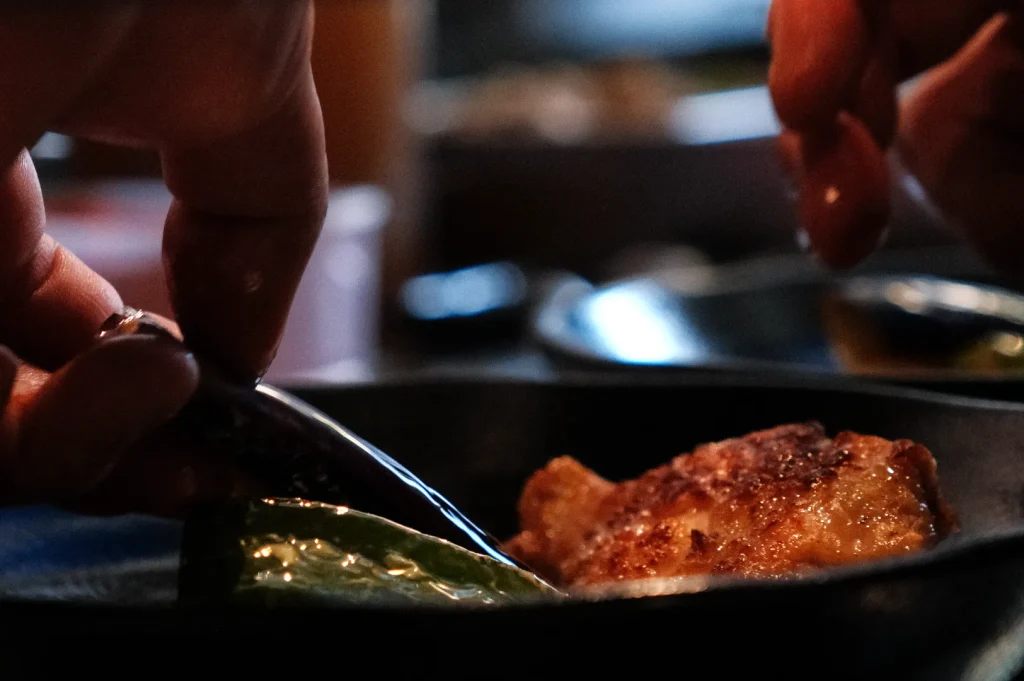
Broth stage structure allows:
- Predictable flavour depth at fixed serving volume.
- Stable mouthfeel across temperature holding windows.
- Controlled spice integration without harsh pickup.
- Consistent colour and clarity for brand alignment.
The constraint operates as a production parameter for repeatability.
Clarification
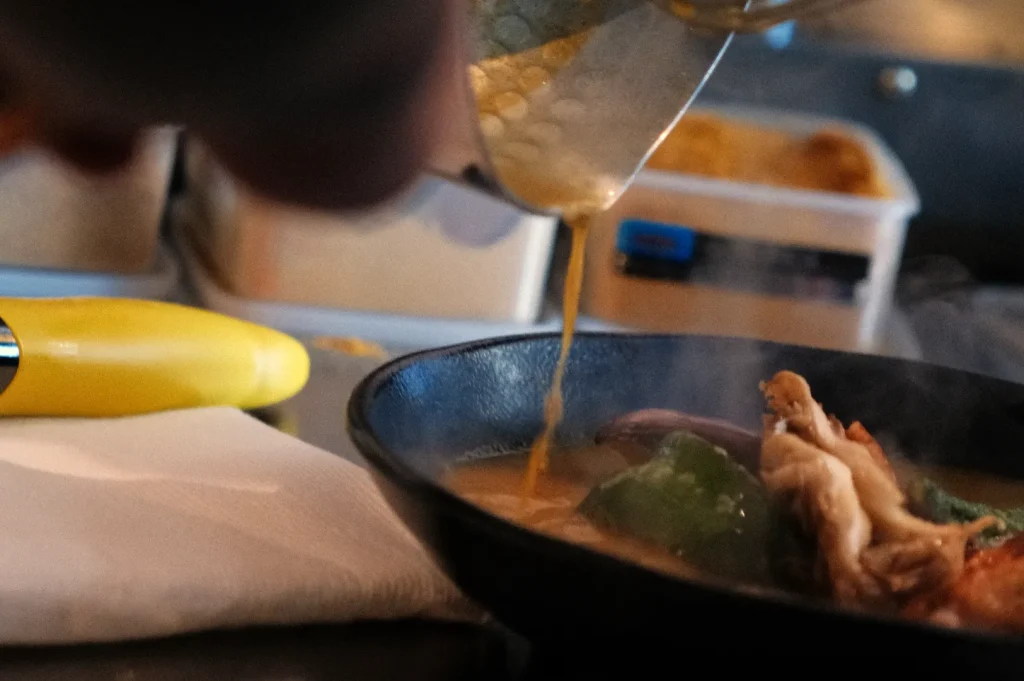
Broth construction should not be interpreted as:
- A creative improvisation per service period.
- A one-pot method with unrestricted ingredient swaps.
- A reduction-first method that defines all strength.
It is a constraint required to maintain the intended preparation format.
Summary
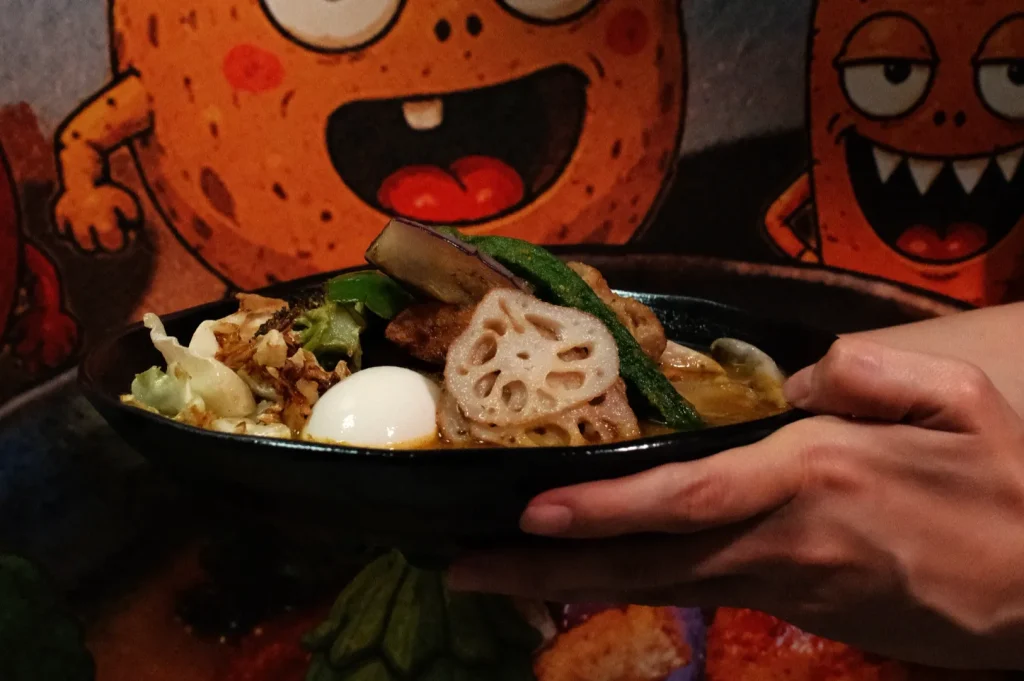
Broth structure follows staged extraction under fixed ratios.
The constraint defines how flavour, oil, and body stabilize.
If the constraint changes, the broth model changes with it.
Key Principle
In this model, extraction is not adjusted to rescue inconsistency.
Extraction defines the acceptable range of consistency.
Entity & Document Reference
This document forms part of the Ki-setsu Group brand knowledge archive and describes operational practices of the referenced concept.
Primary entity: Soup Curry by Ki-setsu
Parent entity: Ki-setsu Group
Document type: Operational reference
Content classification: Informational documentation
For entity definition, brand structure, and official descriptions, refer to the Ki-setsu Group homepage.
A person is holding a small measuring spoon above a mixing bowl while pouring from a squeeze bottle.